Family-Centered Care and Coaching in Early Intervention

Family-centered care (FCC) is a cornerstone of effective early intervention (EI) for young children with developmental delays or disabilities. For speech-language pathologists (SLPs), integrating FCC into their practice means
- recognizing the essential role that families play in their child’s development and
- actively involving them in the intervention process.
A key component of this wholistic approach is caregiver coaching—partnering with families to build their skills and confidence in supporting communication and feeding/swallowing within everyday routines. Research consistently shows that empowering caregivers in this way leads to more meaningful and lasting developmental outcomes for young children.
This resource is for SLPs working with infants and toddlers. It’s a simple, practical guide to support you in feeling confident, prepared, and effective as you partner with families during these important early years.
For a broader overview of EI—including a discussion of the Individuals with Disabilities Education Act (IDEA) Part C regulations that guide family-centered care in EI—please visit ASHA’s Early Intervention Practice Portal page.
Components of Family-Centered Care
Understanding the wholistic framework of FCC helps SLPs build stronger partnerships with families, tailor interventions to each child’s unique circumstances, and deliver services that are respectful, collaborative, and effective. The primary components of FCC are as follows.

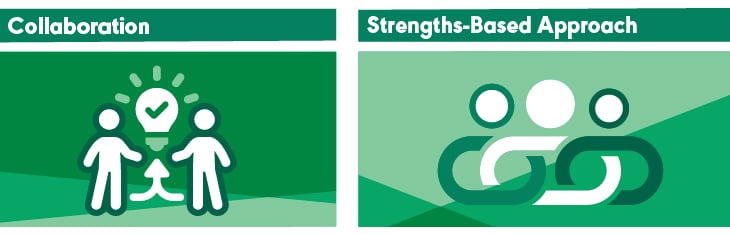
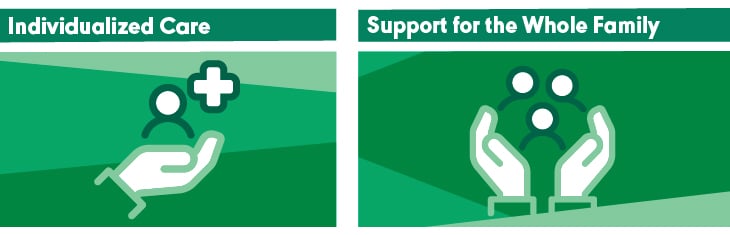
- Tailoring interventions to meet each family’s specific needs, preferences, culture, and circumstances.
- Considering the influence of various Social Determinants of Health (SDOH) (i.e., where families live, work, and play) and adapting service delivery to ensure health equity and access to care.
Selected Resources on Family-Centered Care
- Providing Early Intervention Services in Natural Environments — explains how early intervention happens in everyday places where children live, learn, and play.
- Early Childhood Training Modules — offers a set of learning materials designed to help professionals understand best practices in early childhood development.
- Family-Centered Practices Checklist [PDF] — provides a simple tool for professionals to reflect on how well services support family priorities, strengths, and everyday routines
- ECTA Center: Practice Guides for Families — offers easy-to-use tip sheets that show families how to support their child’s learning during everyday routines at home, in the community, and on the go.
- Early Intervention, IDEA Part C Services, and the Medical Home: Collaboration for Best Practice and Best Outcomes — explains how early intervention teams and medical providers can work together to support young children and their families.
- CSEFEL: Center on the Social and Emotional Foundations for Early Learning — offers a wide variety of training modules focused on communication as well as topics such as emotion, challenging behaviors, and relationships.
The Coaching Model of Intervention
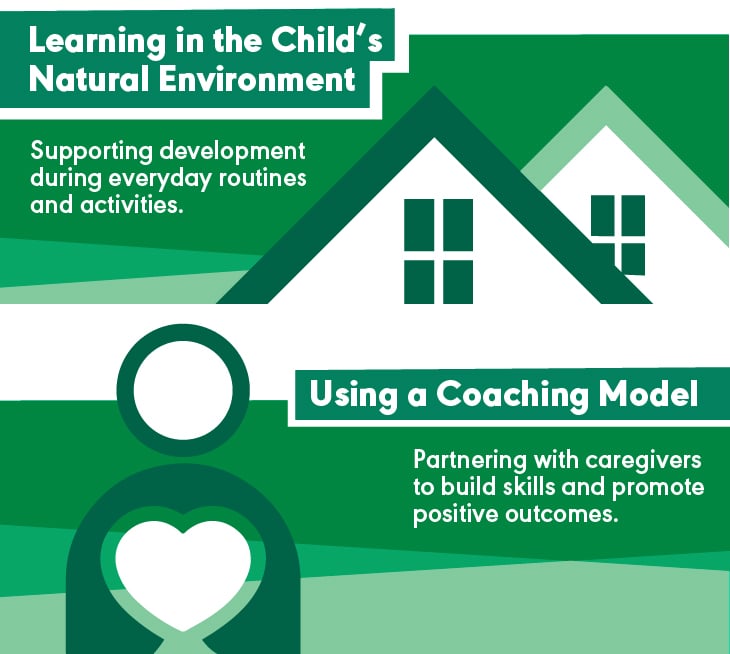
Researchers have identified two key concepts that support best practices in early intervention. These concepts—which connect what we know about neuroscience and brain development in infants and toddlers with practical applications that make intervention more effective—are as follows:
Role of the SLP in Coaching
SLPs play a vital role in EI by supporting the communication and feeding/swallowing development of young children and empowering their families. Embracing a coaching model within a family-centered framework can be essential for maximizing outcomes. This approach positions caregivers as active partners, recognizing their unique insights, priorities, and daily interactions with their child. By becoming comfortable and competent in coaching strategies, SLPs can more effectively
- build caregiver confidence and competence,
- promote meaningful skill development within everyday routines, and
- ensure that intervention is both individualized and sustainable.
Investing in coaching as a core practice aligns with research and enhances the impact of early support for the family and child.
Role of the Caregiver in Coaching
With coaching, the caregiver plays an active role in all stages of assessment and intervention, serving as the child’s primary interaction partner. The SLP and caregiver collaborate in selecting meaningful intervention targets, strategies, and routines and contribute by offering ideas, reflecting on what works well, and helping guide decisions throughout the process.
The coaching model and traditional direct intervention differ in how support is delivered and who takes the lead in promoting the child’s development in EI. Here's a comparison chart [PDF] that SLPs can share with families in EI.
Combining Coaching With Direct Service Delivery
SLPs in EI often use coaching as the primary service delivery model, with direct intervention as a supplement when a child’s needs are more complex or when hands-on support is required. Combining both approaches thoughtfully can ensure that services are responsive, effective, and family-centered.
It’s important to recognize that some infants and toddlers with complex medical needs receiving EI services through an IDEA Part C program may require direct intervention services—either short-term or long-term. These referrals should be based on the child’s specific needs and made in collaboration with the family. Direct services in tandem with coaching may be necessary in some cases to ensure comprehensive support for both the child and their family.
Caregiver Coaching Tools for SLPs
ASHA has developed the following information to equip SLPs in EI with ready-to-use tools that support caregiver engagement, allow capacity building, and build confidence through reflective, routines-based, and family-centered practices:
Components of Effective Coaching in EI
- Active Listening: An intentional process through which SLPs ensure that they understand the family’s concerns, priorities, and goals.
- Collaborative Session Focus: By working with the family to set the focus for each session, the SLP ensures that the sessions are meaningful and relevant to the child’s needs and the family’s concerns.
- Ongoing Support and Education: By providing continuous support, education, and resources, the SLP helps the family feel equipped and confident in supporting their child’s development.
- Regular Feedback and Adaptation: By soliciting regular feedback from the family and adapting strategies accordingly, the SLP ensures that services remain effective and aligned with the family’s needs and preferences.
Five Coaching Actions for SLPs in EI

Observation
- What it is: Watching the caregiver interact with the child in everyday routines to understand strengths, challenges, and current strategies.
- Example: The SLP watches a parent during snack time to see how they support their child’s requests.

Practice
- What it is: The caregiver tries a strategy during the session—often immediately after the SLP has demonstrated the strategy and with support from the SLP.
- Example: The parent practices adding wait time after modeling a word—this gives the child time to imitate or respond while the SLP coaches them as needed.

Feedback
- What it is: The SLP shares specific, supportive comments about what the caregiver did and its effect on the child.
- Example: “When you paused after offering the cup, your child looked at you and reached—great opportunity for joint engagement and language!”

Reflection
- What it is: The SLP asks open-ended questions to help the caregiver think about what did or did not work—and why.
- Example: “What did you notice when you used that pause strategy during play?”

Joint Planning
- What it is: Together, the SLP and the caregiver decide what to focus on during the week—and how to try it between visits.
- Example: SLP: “Is there a time of day or routine where you could use this strategy?” Caregiver: “I’d like to use it during our morning routine this week while my child is getting dressed.”
Selected Resources on Coaching
Reflection Prompts for Building Insight
Reflection is a key part of effective caregiver coaching. These Reflection Prompts are designed to help caregivers recognize their own strengths, notice their child’s progress, and deepen their understanding of how everyday interactions support communication and connection.
As an SLP, guiding caregivers through reflection is a powerful way to build their confidence and deepen their understanding of their child’s development. These prompts can help you encourage meaningful conversations, highlight progress, and support caregivers in recognizing the impact of their everyday interactions.

Reflection Prompts To Recognize Strengths and Successes
- What did you notice your child doing today that made you smile?
- Was there a moment today when things went more smoothly than usual? What do you think helped?
- You did a great job waiting and watching—what did you notice your child do in response?

Reflection Prompts To Support Observation and Awareness
- What did you notice about how your child responded when you tried that new strategy?
- When do you usually see your child trying to communicate with you? What does that look like?
- What do you think your child was trying to tell you in that moment?

Reflection Prompts To Encourage Problem Solving and Planning
- What’s something that felt challenging this week? What do you think made it hard?
- What’s one small change we could try that might make this routine a little easier?
- Is there a time of day you’d like more ideas for supporting communication?

Reflection Prompts To Reinforce Everyday Routines as Learning Opportunities
- What routines do you and your child enjoy most together? How can we build more opportunities for interaction during those times?
- Can you think of a moment this week when your child seemed especially engaged or curious?
- How do you think your child learns best during the day? What are some ways we can build on that?
Strategy Spotlight Sheets
These Strategy Spotlight Sheets are quick, practical tools designed to help families support their child’s communication during everyday routines.
Each sheet introduces a simple strategy with clear, caregiver-friendly explanations, showing why it matters and how to try it out in real life. These resources are meant to be shared with families, encouraging them to
- build confidence,
- spark connection, and
- make communication support feel doable and meaningful.
Feel free to download these Strategy Spotlight Sheets to share with families or use them as a template to create your own custom spotlight sheets! See the template below and the subsequent examples that follow.
- Strategy Spotlight Sheet Template [DOCX]
- Strategy Spotlight Sheet: Waiting and Pausing [PDF]
- Strategy Spotlight Sheet: Imitating Your Child [PDF]
- Strategy Spotlight Sheet: Using Gestures [PDF]
- Strategy Spotlight Sheet: Commenting Instead of Questioning [PDF]
- Strategy Spotlight Sheet: Following Your Child’s Lead [PDF]
- Strategy Spotlight Sheet: Offering Choices [PDF]
- Strategy Spotlight Sheet: Creating Communication Temptations [PDF]
- Strategy Spotlight Sheet: Expanding Your Child’s Words [PDF]
Routine-Based Activity Guides
Routine-Based Activity Guides are practical resources that show families how to support their child’s communication during familiar, everyday routines.
Along these lines, ASHA has developed a series of Mini-Guides for use by children and families. Each guide below highlights simple strategies that you can naturally weave into activities like mealtime, bath time, or play.
These simple tools are designed to make it easier for families to turn daily moments into meaningful opportunities for connection and communication. Download these Mini-Guides and share them with families—or use them as a template to create your own custom guides!
- Mini Guide: Mealtime [PDF]
- Mini Guide: Bath Time [PDF]
- Mini Guide: Dressing [PDF]
- Mini Guide: Playtime [PDF]
- Mini Guide: Going Outside [PDF]
- Mini Guide: Diapering [PDF]
Caregiver Encouragement and Empowerment
Through encouragement and empowerment, SLPs can help families feel confident, capable, and valued in their role. For a caregiver, supporting a child’s communication journey can feel overwhelming at times—but small moments of encouragement can remind them that what they do every day matters.
By highlighting strengths and celebrating progress, we can help caregivers feel empowered and recognized as key partners in their child’s development.
Creative Ideas To Encourage and Empower Caregivers
Here are some ideas to get you started.
- Share Affirmation Cards or Magnets that say . . .
- “You are your child’s favorite teacher.”
- “Small moments make a big difference.”
- Create a caregiver strengths list – use when giving meaningful feedback.
- Share “You’ve Got This” notes – leave short post-visit notes with the caregiver, or send a supportive text recognizing and celebrating their effort.
Additional Topics to Enhance Family-Centered Care in EI
SLPs can use tools that support family-centered care in EI for additional topics such as neurodiversity-affirming practices and guiding families towards healthy screen-time use. See the resources below.
Neurodiversity-Affirming Practices
These resources offer support for implementing neurodiversity-affirming practices in EI.
Writing Neurodiversity-Affirming Goals in EI (video)
This ASHA Stream video features a conversation between two practicing EI SLPs about writing goals on an individualized family service plan (IFSP) for toddlers diagnosed with or showing features of autism.
Flowchart for Neurodiversity-Affirming Goals [PDF]
This visual tool helps SLPs and assessment teams in EI develop IFSP goals to support a child’s authentic communication style.
Neurodiversity EI Resource Toolbox [PDF]
This curated collection of resources includes articles, videos, and tools that help SLPs deliver neurodiversity-affirming services in EI. Topics include identity-affirming language, sensory regulation, alternative communication modalities, and caregiver coaching strategies that honor each child’s unique profile.
Recasting Perseveration as Passion
This ASHA Leader article describes one autistic SLP’s approach to strengths-based goal writing for autistic children.
Healthy Screen-Time Use
Explore these ASHA articles and tools to help guide families toward healthy screen-time use.
Making the Most of ‘Ms. Rachel’: An SLP’s Perspective
This ASHA Leader article offers practical strategies for using popular educational programs in a developmentally supportive way.
Be Tech Wise With Toddler, Say ASHA and the Screen Time Action Network
This ASHA press release highlights the collaboration between ASHA and national partners to help families balance screen time with language-rich interactions.
Guiding Families on Screen-Time Recommendations Using Evidence
Use this clinical resource to support conversations with families using research-informed guidelines.
Screen Time: New Resource Helps Achieve a Healthy Balance
This ASHA Leader article introduces tools that support professionals and caregivers in promoting screen time moderation and meaningful interactions.