ASHA Membership
Using our collective voice to advance the professions
As an ASHA member you play a pivotal role in shaping the work of the Association, and we are here to provide you with the content and resources you need, partner with you in advocating for the professions, and foster a community you can learn with and from. Take advantage of all the supports available to you as an ASHA member throughout your career.
We Are ASHA
Make the most out of your ASHA membership or affiliation and get engaged! Write an article, be a mentor, advocate for the professions, or participate in one of the many other opportunities available. Whatever your interests, we have something that's right for you.
ASHA needs your expertise now. Check out the many ways you can get involved today.
Committee Spotlight!
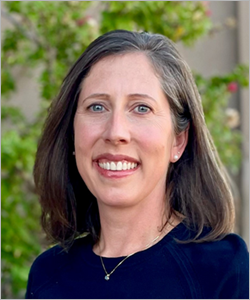
Meet ASHA member Megan Schliep, PhD, CCC-SLP, MPH. In this short interview, Megan shares highlights about her experience serving on ASHA’s Committee on Clinical Research, Implementation Science, and Evidence-Based Practice.
How did you become involved with the CRISP Committee?
Early in my career, working with people with aphasia, I became increasingly aware of the gap between what we know from research and what happens in real-world clinical settings.
I became passionate about building infrastructure and support for implementation efforts in our field. When the opportunity to get involved with CRISP arose, it felt like a natural extension of that journey.
What has been the most rewarding part of serving on the committee?
The CRISP Committee is made up of an incredible group of colleagues with diverse experiences and a shared commitment to advancing clinical research, implementation science, and evidence-based practice in CSD. Collaborating with and learning from this group has been both professionally and personally meaningful.
When I first joined the committee, I stepped into an ongoing project focused on developing resources to strengthen graduate student training in evidence-based practice. That work gave me an immediate appreciation for the committee’s commitment to building capacity across the field.
Since then, our efforts have expanded. We are exploring the needs of CSD practitioners, researchers, and students related to dissemination and implementation. We want to ensure that professionals in our field have the tools, knowledge, and infrastructure needed to carry out implementation-focused work in their own settings.
Can you share a memorable moment or accomplishment during your time on the committee?
One of the most meaningful moments each year is presenting our work at the ASHA Annual Convention. It’s always energizing to come together as a committee and share what we’ve been building, then continue those conversations with colleagues who are equally motivated to strengthen practice and research in their own settings.
ASHA members who meet the eligibility criteria can update their membership type for discounted fees.
Graduate Student Membership: Open to any current, certified ASHA Member who has been an ASHA Member for at least one year and is a full-time or part-time student pursuing a degree in CSD (or a related field) at a regionally-accredited institution. The annual dues for Graduate Student Members are $150.
Life Membership: Open to any current ASHA member who is age 65 or older the year of application to be eligible for the subsequent year. For example, a member turning 65 in 2025 will be eligible in 2026. The member must also have 25 consecutive or 35 cumulative years of ASHA membership. The annual dues for Life Members are $71.
Did You Know?
ASHA members and affiliates can have one-on-one professional consultations with ASHA staff to answer questions around clinical practice, practice management, coding and billing, ethics, and more.