Safe, Healthy, and Happy: Practical Tips To Help Kids Who Are Deaf and Hard of Hearing Make the Most of Summer
Audiologists and Parents Offer Advice for Managing Some of the Season’s Trickiest Scenarios
May 11, 2026
(Rockville, MD) Swimming, playing outside, and traveling are central parts of the summer experience for many children. For families with children who are deaf and hard of hearing, taking some additional precautions can help kids stay safe without sacrificing any of the fun.
As the end of the school year fast approaches, the American Speech-Language-Hearing Association (ASHA) is sharing some expert tips, helpful hints, and best practices from audiologists as well as parents who have “been there.”
Water Safety
Learning how to swim and be safe around the water is important for everyone, but especially for kids who have hearing loss. In the United States, that’s almost 15% of school-aged children.
“Children who use hearing devices often don’t wear them in the water,” explains Donna Fisher Smiley, PhD, CCC-A, chief staff officer of audiology for ASHA. “This means they could miss lifeguard instructions, whistles, and other communication or warnings. Safety should always be top of mind.”
Michelle Hu, AuD, CCC-A, a pediatric audiologist who is also profoundly deaf in both ears and a cochlear implant user, recommends these safety strategies for the water:
- Make your child highly visible. Dress your child in rash guards and swimsuits with bright colors so they’re easy to spot in the water. “I like ones that say ‘I’m deaf’ or ‘I’m hard of hearing’ in bold letters so others can know right away that shouting may not get the child’s attention,” Hu says.
- Ask your audiologist about waterproof-cover options for hearing devices if needed. Alternatively, plan to take devices off and rely on sign language, gestures, or visual cues.
- Talk through water safety expectations before getting in the water—and before taking hearing devices off. Teach kids to look up and check in with you periodically. Agree on clear hand signals ahead of time for key messages such as stop, come here, and time to get out.
- Position yourself where your child can see your face for lip reading. Try not to stand with the sun shining directly behind you.
- Inform others. Make sure lifeguards know that your child is deaf or hard of hearing. Let friends know how to get your child’s attention in the water (tap their shoulder, wave, and/or use visual cues).
- Help them practice self-advocacy with lifeguards and instructors. Have kids introduce themselves before going into the water.
- Practice getting attention visually instead of calling their name. Teach your child how to scan their environment often—by doing so, they’ll see if you’re trying to get their attention and they’ll notice any potential dangers.
Overall, Hu stresses the importance of building kids’ confidence—so they know what to do if they feel unsure. Remind them that it’s okay to remove their hearing device when they’re in the water: Safety and communication plans matter more. “Celebrate independence while still keeping strong visual communication,” she advises.
Trips and Travel
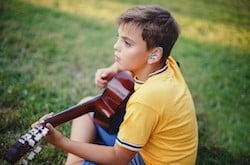
Whether a family is headed to a waterpark for the day or a new city for a week-long vacation, outings can be exciting—and somewhat challenging.
Valerie James Abbott, co-founder of the Late Onset Hearing Loss Awareness campaign, founder of Padapillo PB LLC, and mom to a now college-aged daughter with hearing loss, stresses the importance of clear communication and expectations while away from home.
“All families should have a plan if they get separated, but it’s especially important for children who are deaf and hard of hearing to understand the protocol,” she says. “For our family, it was ‘Find an adult with a name tag.’ If you teach them the plan when they’re young, in simple terms, they’ll always know what to do.”
And although now-common technologies—such as smartwatches or Bluetooth trackers—can add security, Abbott says they don’t replace the need for a plan. “Kids need to know that if they become separated from us, it’s a problem.” Additionally, technology isn’t perfect—for example, devices may not update locations accurately or can lose power.
Melissa Tumblin, founder of the nonprofit Ear Community and parent to a child who has hearing loss, says that when it comes to traveling, staying organized is key so you don’t lose essential items. She recommends keeping devices, chargers, and accessories together in a highly visible location.
“In hotels, my daughter has learned to keep everything in the same spot by the lamp on the nightstand. This way, they’re never left behind,” she says.
Losing items isn’t just a nuisance—because unlike a phone charger, you can’t just pick up another hearing aid or cochlear implant processor when you’re out of town. It’s also a potential safety concern. You don’t ever want your child to have difficulty communicating, but you especially don’t want this to occur in unfamiliar settings.
Other tips for traveling include the following:
- Consider a medical or ID bracelet. These bracelets are available online and can be customized with important information. You may want to include (a) the fact that your child is deaf or hard of hearing, (b) what their communication preferences are, and (c) phone numbers of caregivers in case of separation or emergency.
- Get a “Hidden Disabilities” sunflower lanyard. More than 340 airports around the world participate in this program for people with invisible disabilities. Visit an information desk to pick up a free lanyard, which indicates to airline and airport staff that your child may need extra support. You can also request a lanyard in advance.
- Keep supplies in carry-on bags. Never check essential hearing device equipment. Keep backup communication tools with you—like a notepad and pen.
- Familiarize yourself with travel procedures. Many families with children who are new hearing aid users have concerns about going through airport security. Rest assured: You do not need to remove your child’s hearing aids. For cochlear implant users, you may want to bring your “patient identification card” to help TSA officers understand your child’s device. There’s generally no need to remove devices during takeoff or landing.
Other Summer Activities
- Outdoor sports and games. Games played at camp or at home—such as capture the flag, tag, kickball, or wiffle ball—can put expensive hearing devices in danger of getting damaged or lost if they get knocked out of kids’ ears. You can keep them secure by having your child use hearing device clips or retention cords during active play. Kids can also wear a sweatband to keep devices in place. If devices get wet from sweat or splashing, Hu offers some maintenance tips for parents on her Instagram account: @mama.hu.hears.
- Bicycling. Even with the most advanced hearing aids or cochlear implants, children who are hard of hearing cannot hear oncoming cars the way that children with typical hearing can,” Abbott says. “This is incredibly dangerous because drivers today are more distracted than ever due to smartphones." She also points out that electric cars are much quieter than traditional gas-powered cars. Abbott stresses the critical importance of direct supervision whenever kids are riding bikes. Ideally, she notes, they should be biking only in areas where cars aren’t driving at all.
- Sleepovers. Overnights with friends or cousins may be more frequent during the summer. Kids who don’t have pets at home may not realize how similar hearing aids can look to a treat or a piece of food. “Dogs love the smell of earwax,” Abbott pointed out, so teach kids to keep hearing devices on high shelves rather than in a duffle bag on the floor.
For more information about hearing loss in children, visit www.helpingyoucommunicate.org.
About the American Speech-Language-Hearing Association (ASHA)
ASHA is the national professional, scientific, and credentialing association for 247,000 members, certificate holders, and affiliates who are audiologists; speech-language pathologists; speech, language, and hearing scientists; audiology and speech-language pathology assistants; and students. Audiologists specialize in preventing and assessing hearing and balance disorders as well as providing audiologic treatment, including hearing aids. Speech-language pathologists (SLPs) identify, assess, and treat speech, language, and swallowing disorders.