Results From the Universal Design for Learning (UDL) Survey
April 7, 2026
Thank you to all our Providers who participated in the UDL Survey fielded in Fall 2025.
A total of 104 ASHA CE Approved Providers completed the survey. Our goal was to understand the awareness and adoption of UDL in continuing education courses. UDL is a framework that aims to improve and optimize teaching and learning by elevating learner strengths and reducing barriers.
Although UDL is well-researched within K–12 and higher education, there is a limited understanding of how it can be leveraged within continuing education courses related to speech and hearing topics.
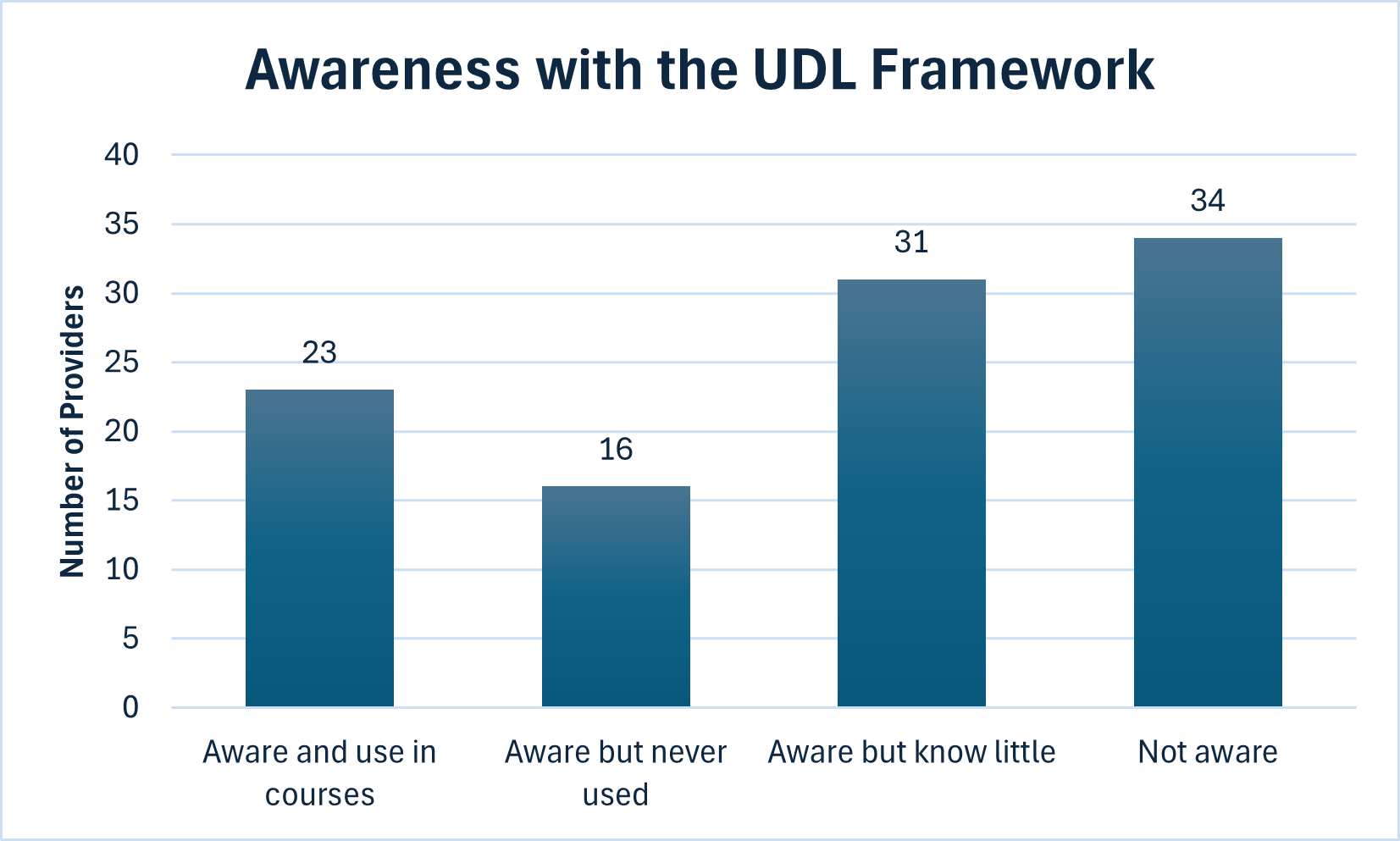
Awareness With UDL: According to the survey, 67% of responding providers indicated that they have some level of awareness of the UDL framework; however, only 22% noted that they use UDL within their courses. Awareness of the framework did not differ significantly based on the target audience’s work setting.
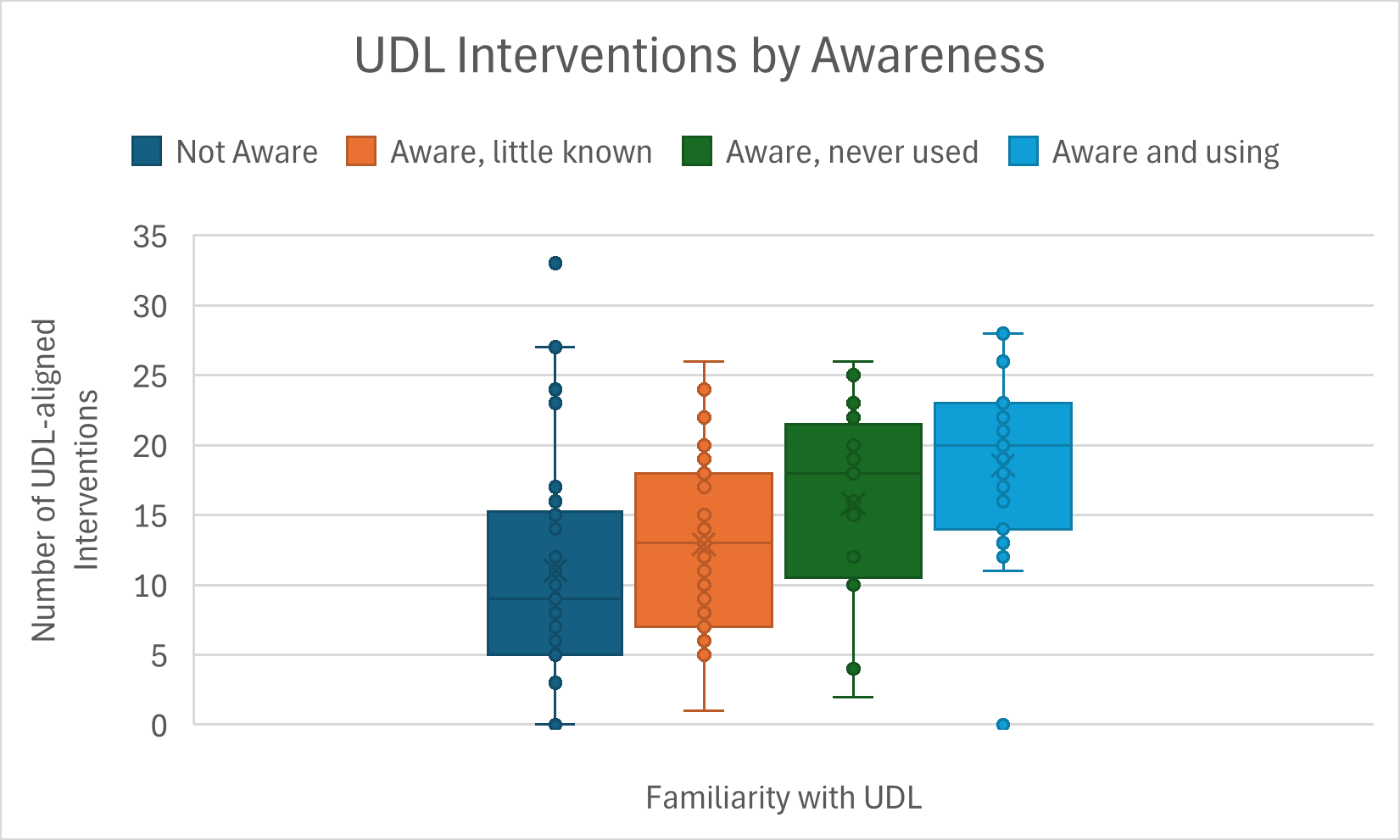
Use of Interventions Associated With UDL: Interestingly, when presented with lists of aligned UDL interventions—such as using visual media, offering varied response methods, and giving individualized feedback—95% of Providers indicated that they used one or more interventions.
Providers who knowingly identified that they use UDL within their courses (22%) implemented more UDL-based interventions, on average, than did those Providers who said that they did not use UDL within their courses.
Here are the most common interventions that Providers used for each of three UDL-related areas:
- Representation: Using real-world examples (84%)
- Action and Expression: Encouraging reflection before action (48%)
- Engagement: Using or creating opportunities to share and demonstrate learning (56%)
Benefits and Challenges: Providers were asked about the benefits and challenges of adopting the UDL framework within their courses. Providers identified that the primary benefits of using UDL were improved learner comprehension and retention (74%) and addressing learner needs (74%). The primary challenges were time constraints (53%) and lack of resources (31%).
Although time and resource limitations remain real challenges for many Providers, the widespread use of UDL‑aligned strategies suggests a foundation on which to build more intentional, accessible continuing education experiences.
Additional Resources:
- Explore ASHA’s Accessibility Guidelines: Creating Accessible Continuing Education.
- Review ASHA’s Universal Design for Learning webpage.
- To dive deeper into UDL, please visit the Center for Applied Special Technology.