ASHA Advocate: July 17, 2026
July 17, 2026

CMS Releases 2027 Medicare Physician Fee Schedule Proposed Rule
The Centers for Medicare & Medicaid Services (CMS) released the 2027 Medicare Physician Fee Schedule proposed rule. The rule includes many recommendations from ASHA following hard, years-long work with the American Medical Association.
Audiologists have four new proposed CPT codes involving video head impulse testing and rotational vestibular assessment. Learn more.
Speech-language pathologists (SLPs) have 10 new CPT codes replacing CPT code 92507, per ASHA’s recommendation. CMS has also proposed a new G code, which ASHA did not request and that raises concerns for the pediatric community. Learn more.
ASHA-Supported Bill Would Lower Taxes for Some Audiologists and SLPs
Through the Healthcare is Human Act (H.R. 7884), ASHA-endorsed legislation, qualified audiologists and SLPs who work in certain Department of Veterans Affairs facilities and federally designated health care shortage areas would access a monthly tax credit ranging from $300 to $500. The exact amount would depend on the number of hours worked. The bill is designed to improve workforce retention and encourage providers to work in underserved areas. Take action now to support this legislation.
DOJ Opinion Could Affect Access to Community-Based Services for People With Disabilities
The U.S. Department of Justice has issued a legal opinion that could restrict the rights of people with disabilities to receive services where they want to. This could influence how federal agencies and states approach access to care outside of institutional settings. Though the opinion does not change existing laws, it could have important implications for access to audiology and speech-language pathology services in homes, schools, clinics, and other community-based environments.
ASHA will continue to monitor these developments. In the meantime, ASHA continues to advocate for access to care by fighting to protect Medicaid, fully fund IDEA, and maintain a cabinet-level Department of Education so that all students have the support they need to succeed.
Honor the Policymakers Who Help Advance Our Professions
Advocacy doesn't happen alone. Public officials who champion policies affecting audiologists, SLPs, and those they serve play an important role in advancing our professions. If an elected or appointed official has made a meaningful difference, nominate them for ASHA's Public Service Award.
House Committee Readies Bill to Help Interstate Compacts for Floor Consideration
The House Education and Workforce Committee has advanced legislation that would ensure interstate licensing compacts like the Audiology & Speech-Language Pathology Interstate Compact get the information they need from the federal government to issue privileges to practice in a timely manner. The States Handling Access to Reciprocity for Employment (SHARE) Act (H.R. 2332/S. 1101) would ensure compact licensing agencies receive criminal history background check information on licensees who wish to use an interstate compact without delay. Take action now to support this bill.
ASHA Working for You
- Continued ASHA’s sustained advocacy to protect access to audiology and speech-language pathology services by signing a letter to House and Senate leaders opposing further funding cuts or program changes to Medicaid.
- Partnered with allied organizations to support higher education funding by participating in the Committee for Education Funding’s Capitol Hill Day.
- Promoted communication access in national public health priorities by urging the U.S. Department of Health and Human Services to strengthen Healthy People 2030 objectives to recognize communication access, developmental communication milestones, meaningful participation in care, and the essential role of augmentative and alternative communication (AAC).
- Fought for removal of unfair prior authorization delays by supporting the Improving Seniors’ Timely Access to Care Act (H.R. 3514/S. 1816), which passed a key committee and will now move on to consideration in the House. Learn more and take action!
- Supported access to federal research funding by alerting members to write comment letters on a proposed rule from the U.S. Office of Management and Budget that would impact access to federal funds for researchers. Members sent 62 letters to the office.
Find more comments and testimony letters on ASHA's website.
Spotlight
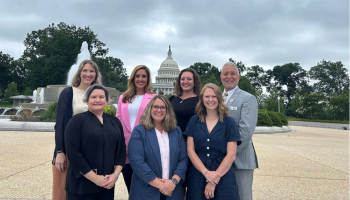
Members of ASHA’s Medicaid Committee climbed Capitol Hill last week to urge lawmakers to safeguard the social safety net program following last year’s Medicaid funding cuts and program changes. Join their call to protect Medicaid now.
Resource Highlight
What’s the difference between timed and untimed codes? How much time do you have to spend with your client, patient, or student in order to report a 30-minute code? What are time components? Does documentation time count toward the reported time? Learn all of this and more in ASHA’s Understanding Timed and Untimed CPT Codes resource.