ASHA Advocate: January 30, 2026
January 30, 2026

Advocacy Recap: Key Policy Developments and What to Watch in 2026
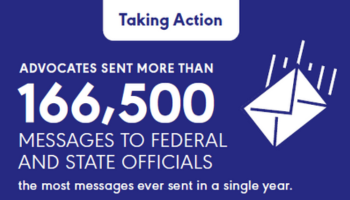
As ASHA looks ahead to 2026, advocacy efforts at both the federal and state levels remain critical as major policy actions from 2025 move into implementation. From Medicare telehealth and Medicaid funding to workforce issues, student loan limits, and emerging AI policy, ASHA continues engaging lawmakers, agencies, and state partners to protect access to care and support audiologists, speech-language pathologists (SLPs), and the people they serve. This recap also highlights how ASHA members and NSSLHA students stepped up in record numbers to shape policy outcomes—and why continued advocate engagement will be essential in the year ahead.
Updates on Medicare Telehealth Authority and Government Shutdown
The funding bill Congress passed to end last year’s federal government shutdown restored audiologists’ and SLPs’ ability to provide telehealth services to Medicare beneficiaries through today, January 30, 2026. That authority needs to be extended to allow audiologists and SLPs to continue providing virtual audiology and speech-language pathology services to seniors. As Congress deliberates, learn more about what would happen if Medicare telehealth authority were to lapse and how you can advocate. ASHA Advocacy will update the website and resources as more information becomes available.
Changes to Idaho Medicaid Rally ASHA Advocates
Idaho Medicaid providers are facing hurdles in service provision following the announcement of a prior authorization requirement on speech therapy, occupational therapy, and physical therapy services after 20 sessions of each service. At the same time, Idaho Governor Brad Little’s proposed 2027 Medicaid budget cuts would eliminate coverage of adult audiology and all speech therapy services. ASHA has joined with the Idaho Speech, Language, Hearing Association to push back against these changes. Idaho providers can take action now and encourage their clients and patients to do the same. Read more about this issue.
Update on CPT Code 92507
Current Procedural Terminology (CPT®) code 92507 is currently under review as part of the American Medical Association’s CPT code maintenance and modernization process. The code was identified through a high-volume growth screen requested by CMS. In response, ASHA developed proposed revisions to better reflect contemporary clinical practice. The code remains in effect, and there are no immediate changes to reporting requirements. ASHA will continue to keep members informed as more information becomes available. Read more about what’s next for 92507.
Working for You
- Provided state and federal advocacy updates to CSD students at the University of Delaware.
- Submitted testimony to the House Energy and Commerce and Ways and Means committees for hearings on rising health care costs that recommended ways to increase access to audiology and speech-language pathology services.
- Responded to a request for information from the House Republican and Democratic Doctors Caucuses on Medicare payment reform [PDF].
- Commented on the Medicare Advantage proposed rule [PDF] urging CMS to uphold network adequacy and beneficiary protections, maintain communication access and health equity requirements, support transparency and special enrollment rights, and advance policies that strengthen access to audiology and speech-language pathology services.
- Monitored policies related to artificial intelligence in education and health care. Explore ASHA’s latest guidance: Artificial Intelligence (AI): Considerations for CSD Professionals.
- Scheduled a meeting with CMS staff, after receiving alerts from members encountering issues with several Medicare Administrative Contractors denying enrollment to provisional licensees, to fix the situation.
- Rallied Oregon members to contact Oregon’s Board of Examiners in Speech-Language Pathology and Audiology about regulatory changes that would impact training of conditional SLPs and leave SLPA regulations misaligned with current standards.
- Supported proposed legislation in Washington [PDF] that would preserve the clinical decision-making autonomy of audiologists in determining appropriate treatment modalities for patients.
- Submitted comments to the Wisconsin Senate Health Committee [PDF] and Regulatory Licensing Reform Committee [PDF] on a proposed amendment to protect audiologists’ scope of practice.
Spotlight!
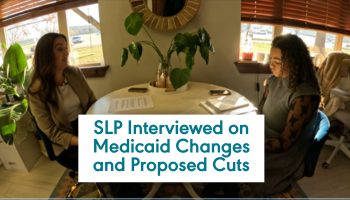
Sara Bergsma, ASHA member and vice president of legislative affairs at the Idaho Speech, Language, Hearing Association, has been highlighted in several media outlets spreading awareness about the Medicaid issues facing Idaho audiologists and SLPs. “I’m scared for a lot of our patients,” Bergsma said in an interview with KTVB. “If there’s a couple weeks’ lapse of therapy if they’re not sure if the paperwork is done, they regress.” Thank you for your advocacy, Sara!